IMDO Unitised Traffic Report Q3 2024

In Q3 2024, Ireland's unitised traffic market displayed divergent trends between the Roll-on/Roll-off (RoRo) and Lift-on/Lift-off (LoLo) sectors. RoRo volumes declined by 1% year-on-year, with minimal fluctuations and stability in post-Brexit trade between Ireland, the UK, and the EU. Rosslare-Europort was the only port to record growth, while Dublin saw a slight decline due to reduced EU-bound traffic. Conversely, the LoLo sector experienced significant growth, with volumes up 15% in Q3 and 10% year-to-date, setting new records and recovering from a challenging 2023. This surge is attributed to eased inflation, strong domestic demand, and a shift from RoRo to LoLo at Dublin Port. Overall, Irish unitised traffic in 2024 is stable, slightly surpassing 2023 levels and showing resilience amid economic shifts.

IMDO Unitised Traffic Report Q1 & Q2 2024

The first half of 2024 has seen resilience in Ireland's maritime transport sector, with ports maintaining strong throughput despite global economic challenges like inflation and shifting energy demands. Ireland's broader economic environment has been positive, with growth driven by rising incomes, residential construction, and multinational sector stabilization, supporting port traffic. Roll-on/Roll-off (RoRo) traffic remained stable, with a slight decrease in the Republic of Ireland and a 2% increase in Northern Ireland. Lift-on/Lift-off (LoLo) traffic saw an 8% increase, driven by Dublin Port's strong performance and the addition of new services. However, passenger and passenger vehicle traffic faced minor declines. Despite global uncertainties, Irish ports continue to be a critical component of the national economy, with the Irish Maritime Development Office focusing on sustainability initiatives for future growth.
New Cork to Rotterdam Shipping Route to Commence
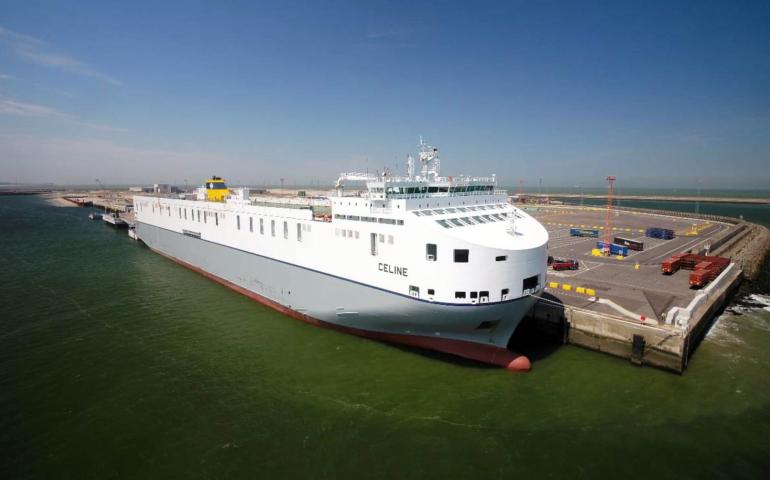
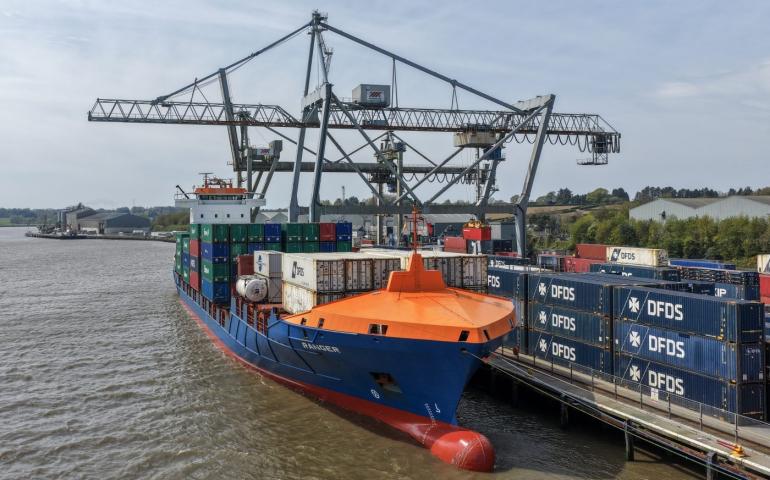
Shipping firm CLdN is to introduce a new route into Cork this month.
IMDO Unitised Traffic Report Q4 2023
Overall, unitised volumes, which encompasses both RoRo and LoLo markets, were below trend in Q4 2023, and have stagnated throughout the year. This is not surprising, given the difficult economic environment within which Irish importers and exporters have traded in recent years. However, unitised traffic has also avoided sharp declines. When the recent challenges are considered, the theme of unitised traffic at ports on the island of Ireland instead becomes one of resilience in 2023.

IMDO Unitised Traffic Report Q4 2023

In Q4 2023, unitised traffic at ports on the island of Ireland displayed resilience amid challenging economic conditions. RoRo traffic in the Republic of Ireland (ROI) declined by 2% to 289,971 units, marking the first sub-290,000 performance in five years, primarily due to the cessation of the P&O Dublin-Liverpool service. Meanwhile, Northern Ireland's RoRo volumes grew by 4% to 222,740 units, with overall island-wide RoRo traffic rising 1% year-on-year to 512,711 units. Dublin Port saw a 5% decline, while Rosslare Europort grew 12%, driven by a shift toward direct ROI-EU routes post-Brexit. LoLo traffic at ROI ports rebounded with a 5% increase to 278,850 TEUs, reversing a year of steep declines. Despite stagnation in overall unitised traffic amid inflation, rising interest rates, and global economic pressures, the sector retained much of the gains from the COVID-19 trade surge, highlighting its underlying resilience.
IMDO Unitised Traffic Report Q3 2023
The volume of RoRo traffic at Republic of Ireland ports declined by 2% to 291,879 units in the third quarter of 2023 when compared to the same period in 2022. Traffic to ports in Great Britain and ports in mainland Europe both fell by 2% each. All three Irish RoRo ports – Dublin, Cork and Rosslare Europort – recorded a decline this quarter. For RoRo traffic, July and August are relatively quiet months, as the holiday season is in full force. September however, is a busy month, with volumes typically 3% above average as preparations begin for the pre-Christmas period. In September 2023, volumes declined by 5% when compared to 2022.